How a cigar is built, leaf by leaf
A calm 13-minute video shows one Churchill being hand-rolled on a patio, start to finish, with no narration. This lesson supplies the words: what the wrapper, binder, and filler each do, and how a bundle of leaves becomes a finished cigar.
💡 Dotted words are definitions
Any underlined term has a plain-English definition. Hover it on desktop, or tap it on mobile, to pop it open.
✅ Quizzes keep score
Each stage ends with a multiple-choice check. Your running score sits in the top bar; a final tally waits at the end.
🍃 A note on sourcing
The silent video has no captions to quote, so every fact here is drawn from reputable cigar references (Holt's, Cigar Aficionado, Famous Smoke, Cigar Chief, La Aurora), listed at the end. The screenshots are the real roll; the explanations are researched.
Three leaves, one cigar
A premium cigar is not stuffed tobacco. It is three kinds of leaf doing three jobs, assembled by hand. From the inside out: the filler (the core, where most flavour lives), the binder (the leaf that holds the core together), and the wrapper (the pretty outer leaf you actually see and taste first).
The specific cigar in this video is a Churchill with a Brazilian binder, Nicaraguan filler, and an Ecuadorian maduro wrapper, finishing at 7 x 47. That "global blend" is normal: blenders pick each leaf from a different country for what it contributes.
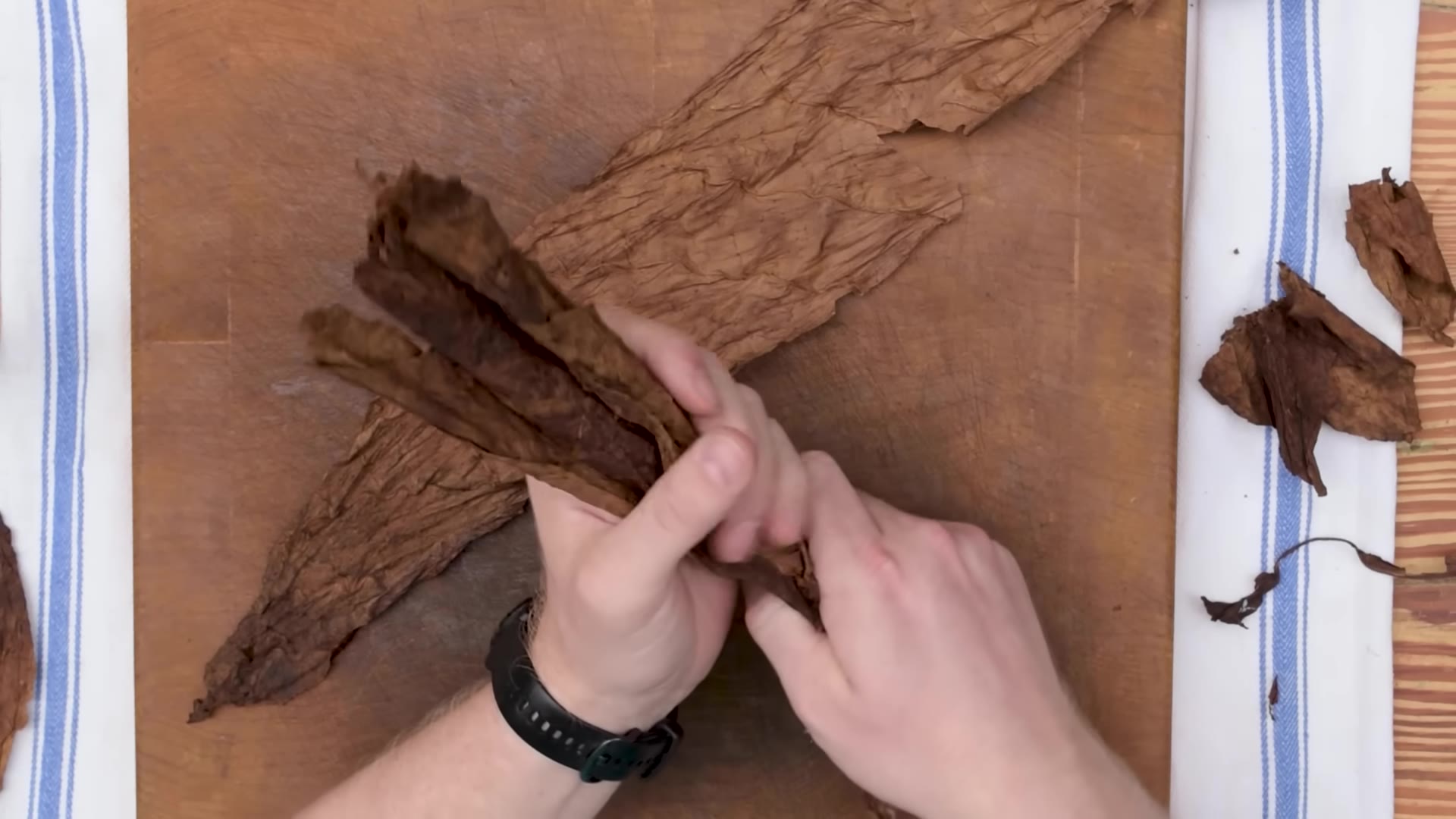
In a premium cigar, which leaf carries most of the flavour and sits at the core?
Bunching the filler
The roller gathers several long-filler leaves and folds them together into a bunch. The trick is to leave air channels running down the middle so smoke can travel through. Fold too tight and the cigar plugs; too loose and it burns hot and fast. That balance is the draw.
There are named ways to do this. Cuban rollers often use entubar, rolling each leaf into a little tube; others use accordion bunching, folding each leaf back and forth and stacking them. Both exist for the same reason: protect the airways.
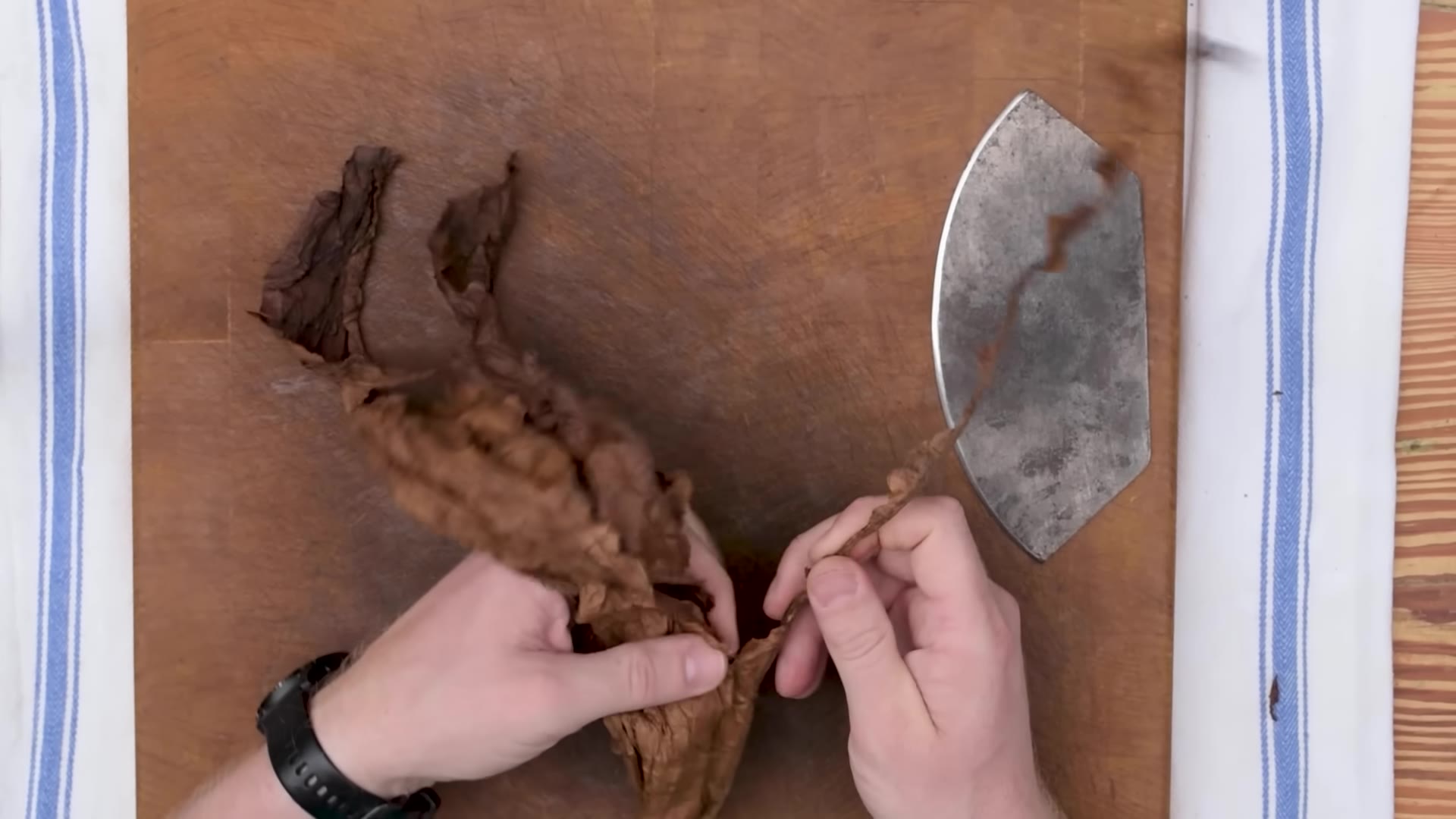
Why does the roller keep small air channels down the middle of the filler bunch?
The binder and the press
The folded filler gets wrapped in a binder leaf. Filler plus binder together is what rollers call the bunch, and it is the bunch, not the pretty wrapper, that decides how the cigar burns and holds its shape.
The bunch then goes into a wooden mold or press to set its final shape and firmness. Factory bunches often press for 15 to 30 minutes; this patio roller left his in the mold for about five hours between bunching in the morning and wrapping in the afternoon.
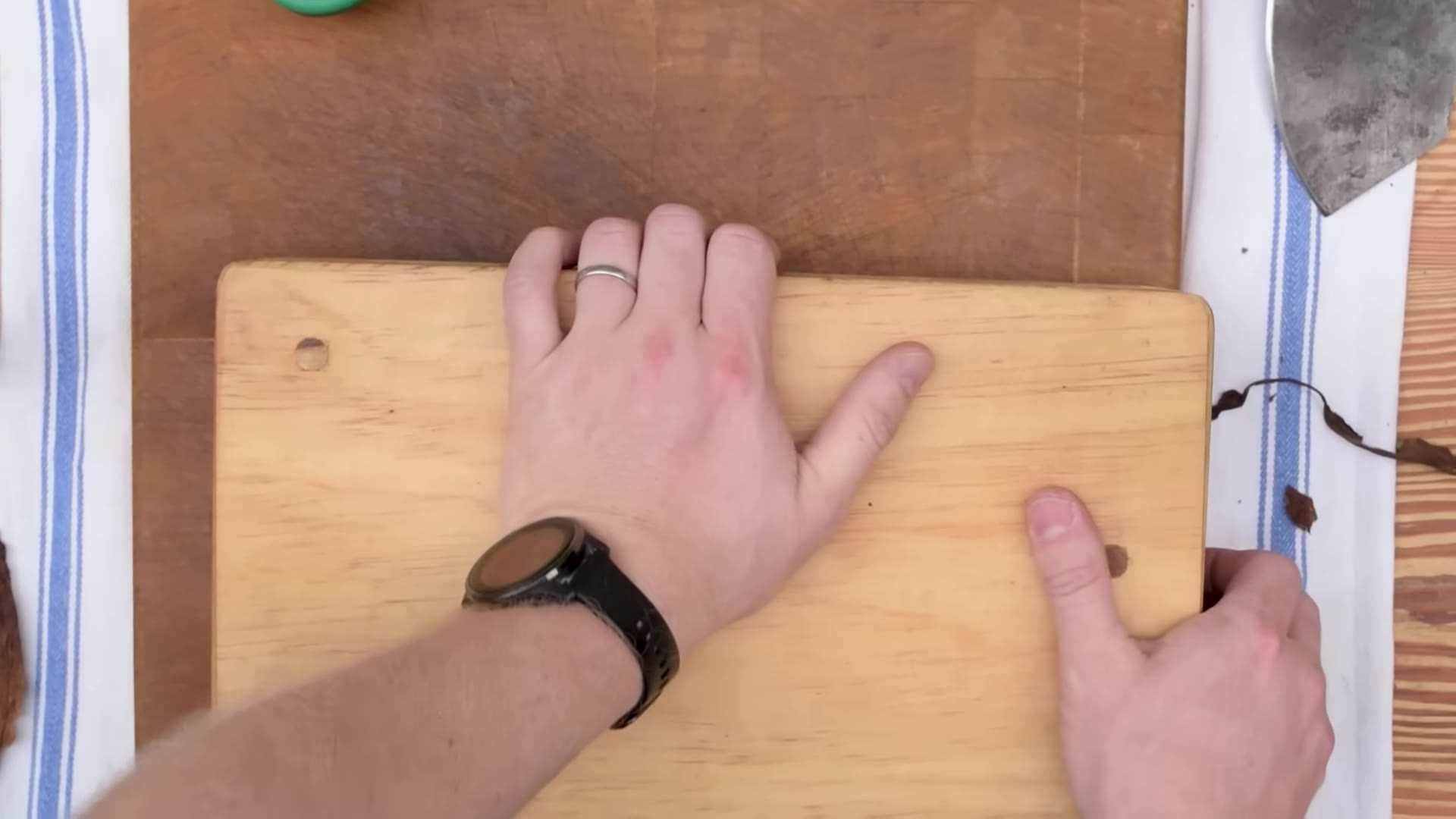
What is the "bunch," and what is the press for?
Applying the wrapper
Now the showpiece. The wrapper is the outer leaf, and on a good cigar it can account for 60% or more of the flavour you perceive, which is why it gets the most attention in growing and fermentation. This one is an Ecuadorian maduro: darker, longer-fermented, and typically rich and a touch sweet.
The roller cuts the leaf, usually on a curve, using the chaveta, then spirals it up the bunch starting at the foot, stretching it gently so it lies smooth with no gaps. It is the slowest, most skilled part of the roll.
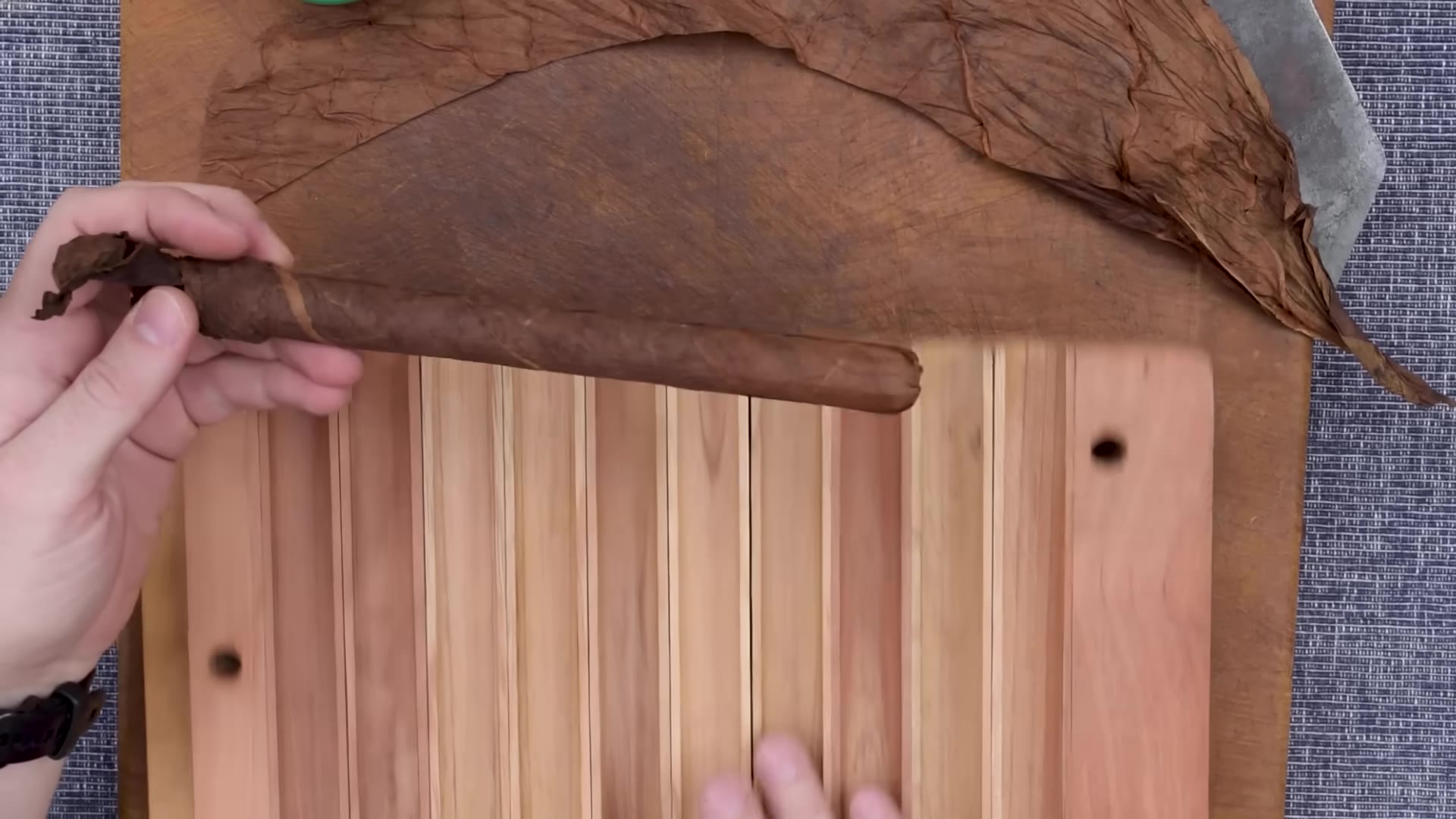
Why does the wrapper get the most care of the three leaves?
The cap, and a finished cigar
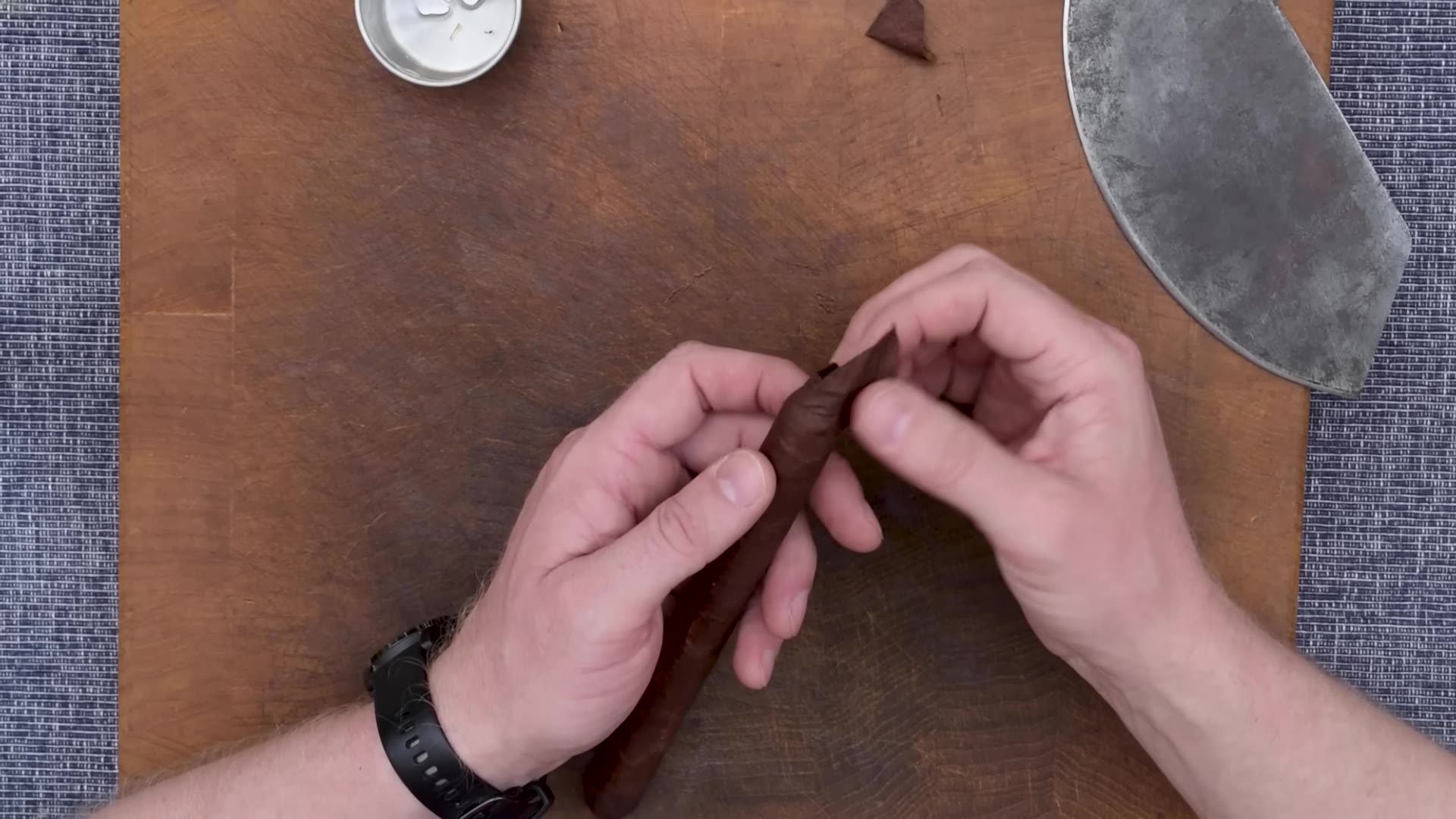
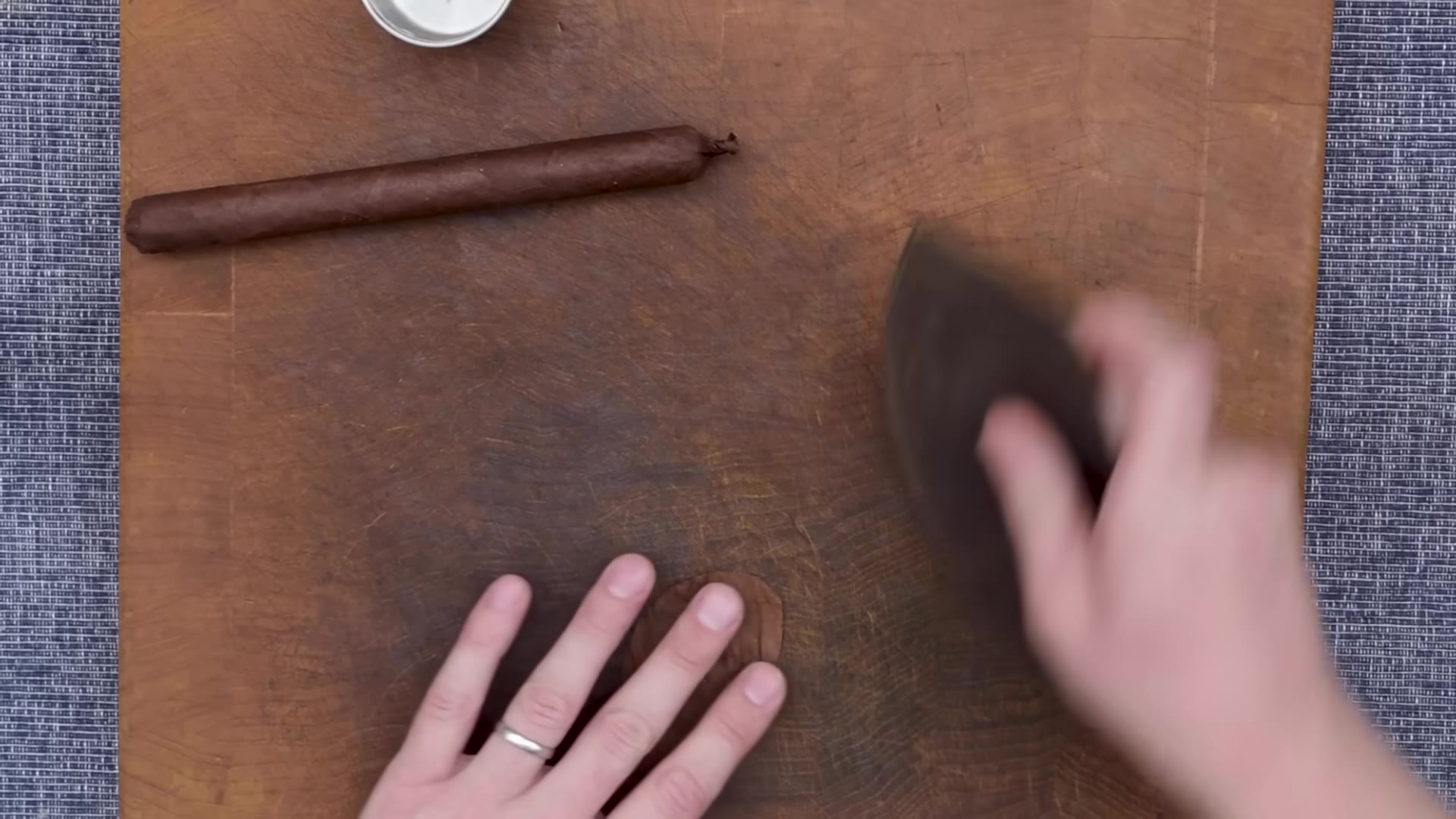
The head (the end you will cut and smoke) is sealed with a cap: a small round piece of wrapper leaf glued on with a dab of flavourless vegetable gum. When you later cut a cigar, you cut the cap but never below its shoulder seam, or the whole wrapper unravels. A layered triple cap is a sign of careful hand work.
The opposite end, the open foot, is what you light, toasting the whole rim first for an even burn (and to avoid canoeing). And that is the finished object: one hand-rolled cigar from a pile of leaves.
When you cut a cigar before smoking, why not cut deep below the cap?
Why it is called a "Churchill"
Cigars are named by vitola, their size and shape. Every vitola is two numbers: length in inches and ring gauge (the diameter, measured in 64ths of an inch, so 47 means 47/64 of an inch across). A Churchill is the classic 7 x 47, named after Winston Churchill, and it burns a slow 60 to 90 minutes.
This cigar is a straight-sided parejo; shaped ones (torpedoes, pointed feet) are figurados. And its dark skin is the maduro wrapper, "ripe" in Spanish, from the extra fermentation that darkens the leaf and sweetens the smoke.
A cigar is labelled 7 x 47. What do those numbers mean?
Your score
One-sentence summary
A hand-rolled cigar is three leaves doing three jobs: a blended filler bunched around open airways, a binder that shapes and steadies the burn, and a carefully fermented wrapper spiralled on and sealed with a cap, all named by a length-and-diameter vitola like the 7 x 47 Churchill.
Glossary
Every term marked with a dotted underline above. Skim it, or search the page for a word.
Where the facts came from
The video is silent, so every claim here is grounded in these cigar references. Screenshots belong to the original video creator.
- Holt's Cigar Company, "Cigar Anatomy: Parts of a Cigar" (wrapper ~60% of flavour, binder, cap, foot).
- Cigar Aficionado, "Cigar Shapes, Sizes and Colors" (ring gauge in 64ths, Churchill 7 x 47, maduro).
- Famous Smoke Shop / Cigar Advisor, "How Cigars Are Rolled" (bunching, pressing, wrapping).
- Cigar Chief, "Torcedores: The Cigar Rolling Process" and "Wrappers, Binders & Fillers Explained" (entubar, accordion, chaveta).
- La Aurora, "The Cigar Roller" (the torcedor's craft).